Founder stories
Browse Stories
Stories.filterMetadata.milestone.subtitle

Carrd started as a side project in 2016. I wanted to create the simplest possible way to build one-page websites. The Concept After years of bui...
We started Pocketed during the pandemic to help startups find grants and funding they didn't know existed. The Idea During COVID, there was sudd...
I built Fantasy Congress as a side project - a fantasy sports game but for politics. It taught me everything about building in public. The Idea...

I validated Buffer with a landing page before writing any code. Within 4 days of tweeting about it, I had my first paying customer. The Validation...
Elston launched Tiiny Host with a simple hypothesis: there are customers who just want a simple tool to quickly host HTML content. SEO Takes Time...

Pierre de Wulf and his co-founder Kevin met in high school. After building ShopToList and PricingBot with limited success, they went all-in on Scrapin...

Erwin had two failed projects before Tailscan. He gave himself a week to build a first demo and showcase it on Twitter. Viral Demo His demo got...

Ramit Sethi waited two years before creating his first product, building audience to 50,000 visitors per month first. First Product His first pr...

At 19, Julia McCoy was in college pursuing a degree she didn't want. She taught herself to write by writing hundreds of cheap articles. Finding the...
Built to solve his own problem with Notion navigation, Gourav kept Notion Boost open-source while still earning $9K+ through premium features.

Steph leveraged her experience leading content at The Hustle to launch Doing Content Right, selling $28,414 in the launch month and $47,014 in the first three months.

Substack found its first customer in Bill Bishop, whose Sinocism newsletter reached a six-figure annual run rate on its first paid day.

Morflax launched with a viral tweet about the 3D mockup builder and generated $7K revenue in the first month.

Cassey Ho posted one Pilates video for her 40 students before moving cross-country. It accidentally became the #1 female fitness channel on YouTube with 500M+ views.

Immad Akhund left Google and sold his first startup for $45M before building Mercury, the go-to banking platform for startups valued at $3.5B.

Michael Mignano built Anchor to make podcast creation free and easy. The platform now powers one-third of all new podcasts and was acquired by Spotify.

Noam Shazeer co-authored "Attention Is All You Need" — the paper that created modern AI. When Google refused to release their chatbot technology, he left to build Character.ai, reaching $1B valuation in 16 months.
Mathias Robin spent 18 months bootstrapping Nala, a bilingual meditation app, choosing 13 specialist narrators over one generic catalogue and SEO over ads.
Madhu Pattarambil, a Sydney chemical engineer with no startup background, shipped a free AI travel app in 17 languages in two weeks, funded entirely by travel affiliate commissions.
A DocuPanda cofounder set out to prove you can build a small SaaS that takes real money in under 24 hours, and walked through doing exactly that with a PDF redaction tool.
Crystal Harrison spent almost 25 years watching freelancers get blindsided by tax bills. She used an AI dev tool to build SnapTax in evenings and weekends, and reached her first 3 paying customers eight weeks after launch.
After a decade making content, Thomas Frank made $1 million in a single year selling Notion templates, with the line peaking at $100k a month in one-time template sales.
Michele and Mathias Hansen launched Geocodio as a side project in January 2014. A roughly $30 first month covered their small DigitalOcean server bill and proved strangers would pay.
Chetan built Schedo because scheduling tools felt dated, validated it through communities and his own meetings, and turned a local window-cleaning customer paying $12/month into proof that the product could sell.
After two failed URLSlab attempts, Yasha Boroumand turned FlowHunt into an AI-agent builder, used the product to automate its own SEO engine, and grew to $10k/month with $6k recurring subscriptions plus $4k one-off credits.
Peldi Guilizzoni launched Balsamiq as a one-person wireframing tool, got a sale before launch, and passed $100K in total revenue in less than five months.
Antonio Escudero built RankInPublic into a free tournament launch platform, then turned the same founder audience into a $17k+ MRR SEO directory-submission business.
Kyan Santiago-Calling built ToneAdapt as a fast guitar-tone matching project, then used TikTok, Instagram, Reddit, and relentless short-form demos to reach 100,000+ users and a reported $25K/month revenue run-rate.
Neel Seth built ReplyDaddy from his own Reddit distribution problem, kept humans in control of every reply, and turned an AI-assisted MVP into a reported $1.5K MRR product.
Emanuele Di Pietro turned a midnight challenge to control Codex from iPhone into Remodex, a local-first open-source remote that reached about $10K revenue in its first month.

Ramsri Goutham Golla turned years of AI question-generation research, Medium posts, GitHub code, and a Udemy course into Questgen.ai, a solo edtech SaaS that reached about $4K MRR without a viral launch.
RidePal did not start with a broad fitness app. The team built directly for mountain bikers, shared beta versions in rider communities, and saw 35 paying Android customers on launch day.
Abhishek Chakravarty spotted Typeform users looking for a cheaper form builder, sold his adjacent chatbot product, and built Youform into an $18K MRR freemium SaaS with pricing people could understand.
Jason Zigelbaum turned ecommerce feedback pain into Zigpoll, stayed solo, and compounded to about $125K MRR by doubling down on Shopify merchants, agency operators, pricing fit, and customer-led product requests.
Ana Vershinina and two co founders built a travel planner on evenings and weekends around full time jobs. Eleven days after launch: 700 installs and three PRO subscribers.

Reforge started as a weekend side project Brian Balfour ran while still at HubSpot. Five years later it was profitable with eight figures of revenue, and only then did he take outside money.

Brian Chesky and Joe Gebbia had paying guests within a week of the idea because a design conference had sold out every hotel in San Francisco. Turning that weekend into a company took a year of failed launches, credit card debt and cereal money.
Cedric Isubol built an AI calorie tracker for the home cooked local food that western nutrition databases do not recognize. Two weeks after the Google Play launch it had 14 paying subscribers and $35 in monthly recurring revenue, with no ad spend and one marketing channel.
Chris Coyier launched css-tricks.com on July 4, 2007 as SEO filler in a network of Adobe help sites. By his own 2007 wrap up post in January 2008 the blog already had paying sponsors, and in March 2022 he sold it to DigitalOcean.
Deepak Kanakaraju spent three years writing at DigitalDeepak.com without selling anything. In August 2016 he published an outline for a course he had not made, emailed his list, and took 250 pre-orders in a week.

Eric Migicovsky named Beeper in public in July 2020 and launched it on Hacker News 195 days later as a paid chat app at $10 a month. Automattic bought it in April 2024.
Two years of building a peer to peer student guide platform produced exactly five bookings, three of them from Johannes Reck's mother. Then a Swiss rafting company called.
Huel's website went live with no buzz at all and took two orders on the first day. Julian Hearn packed them himself, and says revenue reached £9 million two years later.

TransferWise went live on 24 January 2011 with a flat one pound fee and one TechCrunch post. Seven days later the founders reported customers moving money between eight countries.

Matthieu Rouif and Eliot Andres shipped the first version of Photoroom, then called BG, fourteen days after the first line of code, with subscriptions already wired in. It now processes more than 7 billion images a year.
Mike Beckham and two co-founders put $200,000 into a drinkware brand competing with Yeti. The first bottle sold about six months later, and 24 million followed in seven years.
Liquid Death was a Facebook page and a fake commercial for over a year before it was a product. By the time the first cans shipped in January 2019, the brand already had 100,000 followers and less than $10k of paid media behind it.
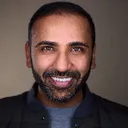
Moiz Ali launched Native on Product Hunt in July 2015 with no inventory, no factory and a formula bought from an Etsy seller. He placed his first production order only after 60 units were already sold.

Peter Askew won VidaliaOnions.com at auction with a bid he expected to lose, spent a month working out what to do with it, then partnered with a Georgia onion farmer. They forecast 50 orders in season one and shipped over 600.

Taimur Abdaal and Lukas Köbis quit their jobs in 2019 to build a better spreadsheet. Users called it cool and left. The first paying customer only arrived in early 2021, after they booked 40 demos in a single month and ran a free pilot.

In July 2024 Tanay Kothari shut down the hardware Wispr had spent three years building and cut the team from 40 people to 5. The dictation app that replaced it was in users' hands six weeks later and selling subscriptions by the end of September.

Monzo shipped a loss making prepaid card as a stand-in for a bank account, put the first 500 into customers' hands 271 days after founding, and reached a million customers in September 2018 with no meaningful ad spend.

Volkan Kaya and his co-founder spent seven months building a website builder nobody would use for free. A two week side project that hit number one on Product Hunt finally produced customer number one.
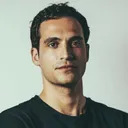
Will Ahmed asked athletes what they wanted and heard one thing, asked what their problems were and heard another, then spent three years building for the second answer.

Truebill spent two years as a free app whose founders assumed nobody would pay a subscription to cancel subscriptions. The premium tier they shipped as a last resort converted at 3.5 times what Yahya Mokhtarzada expected.
Share your revenue journey and inspire other founders.