Founder stories
Browse Stories
55 founders with Hybrid businesses

On March 1st 2023, OpenAI announced the ChatGPT API. Right on that day, I came up with the idea to create a new UI to solve my own pain points with th...
My journey took me from being a Paris waiter to an $80,000/month solopreneur over seven years of persistence. After 17 failed projects, I found succes...

 Indie Hackers
I was frustrated with how hard it was to find real information about starting an online business. Everyone talked about raising venture capital, but I...
Thomas failed 30 projects before Uneed. Six years later, he runs it full-time at $10K/month.

Started as a free forum in 2007. 12 years later: $1.2M ARR from conferences, memberships, and courses.

Started curating single-page websites in 2008. Cross-promotion between projects grew to $100K+/year.

Started with a blog nobody read. Rebranded to Creator Science and built to $500K/year through newsletter, podcast, and community.
Victoria built a WordPress blog with only 89 posts and 15,000 monthly visits to reach $1K/month from affiliate marketing.
Derryck recognized the growing demand for SEO content and built Big Star Copywriting to $30K/month, surviving the 2008 crash.

Ellen pre-sold her first program with zero content, then built it based on customer feedback to reach 7-figure lifetime revenue.

Sumit saw colleagues struggling with Excel and built TrumpExcel to 1M+ monthly pageviews and $10K/month revenue.

Morflax launched with a viral tweet about the 3D mockup builder and generated $7K revenue in the first month.
Two ex-Microsoft engineers built the definitive travel search for getting from A to B anywhere in the world.

Cassey Ho posted one Pilates video for her 40 students before moving cross-country. It accidentally became the #1 female fitness channel on YouTube with 500M+ views.
Michael Cameron and Bernie Tschirren built Rome2rio from their parents' living room to 10M+ monthly visitors before selling to Omio.

Frederic Lalonde built Hopper through a scary pivot - from travel blog aggregator to AI-powered booking app with $1B+ in sales.

Henrique Dubugras and Pedro Franceschi started working together at 16 and built Brex to $12B valuation.

Matt Kepnes quit his hospital admin job after a trip to Thailand opened his eyes. His travel blog became Nomadic Matt — one of the world's largest travel media brands with over 1 million monthly readers.
Andrew Henderson built a radio broadcasting empire at 22, then faced a 43% tax bill that changed his worldview. He founded Nomad Capitalist to share what he discovered — and built a 60-person global advisory brand.
Dr. John Berardi launched Precision Nutrition to a 30,000-person newsletter. They made $500,000 in six months. Then their payment processor froze every dollar. This is the story of how they survived.
Alex Hormozi sold his six gyms, poured the money into a licensing model, and hit $17M profit in the first year. He scaled to 4,500+ locations across 13 countries, sold for $46.2M, then built Acquisition.com into a $250M+ portfolio.

Chris Do ran an Emmy-winning design agency for 22+ years. In 2014, he started making YouTube videos teaching creatives how to run businesses. That side project became The Futur — 2.5M subscribers and $4.9M+/year.

After two acquisitions (5by by StumbleUpon, Islands by WeWork) and advisory roles at TikTok and Reddit, Greg Isenberg launched Late Checkout. In three years, it hit 8 figures with zero outside capital.

Codie Sanchez went from Goldman Sachs to building Contrarian Thinking — a newsletter that hit 10K subscribers in 30 days. She parlayed that audience into courses, community, and a holding company that now does 9 figures in revenue.

Nick Huber started Storage Squad at Cornell, expanded to 25 college towns, then caught the self-storage bug. He used Twitter to raise $20M+ and scale to 63+ properties worth $150M+, while building Sweaty Startup into a media brand.

Jack Butcher assembled cars at a Honda factory, talked his way into design school, spent 8 years at agencies, then burned out running his own. In January 2019, he started posting simple visuals on Twitter. Within 18 months: $180K/month.

Dan Koe tried fitness YouTube, dropshipping, a Facebook ads agency, and two e-commerce brands — all failed. Then he started writing on Twitter. Within 4 years: $3.3M/year and 3.4M followers.

Wes Bos started teaching at a coding bootcamp, then launched "React for Beginners" — 2,300 students in 3 weeks. His free JavaScript30 challenge attracted 754K+ sign-ups. Total: $10M+ in course revenue from Hamilton, Ontario.

Sam Parr started with HustleCon conference, leveraged the email list to launch The Hustle newsletter, grew to 1.5M+ subscribers, and sold to HubSpot for ~$27M.

A side project to catch the ChatGPT wave became a paid Substack newsletter doing roughly $30k a month, built on quarterly product drops and a founding member tier.
Ethan Tian bootstrapped Textideo, an all-in-one AI editor for video, copy, and illustrations, to a self-reported $18,000 a month by listing everywhere, shipping constantly, and letting creators dictate the roadmap.

Eric Alli sold themes for over a decade, watched WordPress sales dry up, then rebuilt on Ghost and reached $20k a month, with custom build services making up three quarters of it.
Justin Shiels rebuilt his stationery brand SoCurious solo from his Austin apartment, landing 722 orders, 485 preorders from a friend's collab and 38 subscribers in Q1 2026.
John Brewton spent nine months publishing to barely a thousand readers, then a single proof post timed to a small coaching offer flipped his Substack into a six-stream business on track for $200k.
Matt McGarry launched Newsletter Operator in January 2023 with a tweet and a 1,300-follower audience. Within a year and a half it grew past 25,000 subscribers and supported a 7-figure business built on courses and an agency.
Mehreen made just $847 from her travel blog in year one. By her first full-time year it brought in $67,000 across six income streams. The turning point was learning SEO and email.
James Ivings and Danielle Johnson launched a one-click email unsubscribe tool on Product Hunt in 2019, then grew it to around $10k MRR while publishing every metric on a public open-startup page.

After years of failed AI products, Kirill Shevchenko co-founded Roundups, an AI content tool for affiliate marketers, and turned it profitable in a year by pairing a Product Hunt launch with an AppSumo lifetime deal, all while keeping his day job.

A non-technical generalist from Belgium turned a viral build-in-public tweet into a two-year newsletter that earned about $33k and exited for $35k.
Pranay Agarwal and his co-founder ran Mockey as a free, ad-supported side project for years. Adding subscriptions and download caps roughly tripled revenue, reaching about $12k a month.
Justus Mulli shipped BlazeSQL after two abandoned AI products, won the first subscriber two months after launch, and crossed $1K MRR within about six months.
Kyle Konstnar stopped waiting for SEO and landing-page tweaks, went directly to spas, salons, and service businesses, and turned HandyPay into a $1K MRR payments tool in under 60 days.
After two failed URLSlab attempts, Yasha Boroumand turned FlowHunt into an AI-agent builder, used the product to automate its own SEO engine, and grew to $10k/month with $6k recurring subscriptions plus $4k one-off credits.
After a COVID layoff, Ilya Novohatskyi built Microns on nights and weekends as a micro-startup acquisition marketplace, using no-code tools, Twitter and Product Hunt to reach $1K MRR in one year.

After two failed products and six Reddit bans, Arthur Yuzbashev tracked subreddit behavior in a spreadsheet, turned the pattern into MediaFast, and grew it to roughly $6K MRR with organic distribution.
Anatoly Pashias and Nick Nicolaou built Motionvid.ai from a filmmaker's motion-design bottleneck, launched a 21-day MVP through AppSumo, and grew the AI video tool to about $7.8K MRR without relying on paid ads.
Antonio Escudero built RankInPublic into a free tournament launch platform, then turned the same founder audience into a $17k+ MRR SEO directory-submission business.
Neel Seth built ReplyDaddy from his own Reddit distribution problem, kept humans in control of every reply, and turned an AI-assisted MVP into a reported $1.5K MRR product.

Lorik Morina did not wait for a viral launch. He took a 33-download, zero-MRR first day, layered Hacker News, $20/day Meta ads, Shopify App Store distribution and referral loops, and grew RotateProduct's app revenue to about $6.5K MRR by week 21.

Santanu Dasgupta turned two decades of GTM pain into Meerkats AI, an agentic marketing platform that found early customers through agency outreach, education and LinkedIn posts instead of a broad launch.
Edmund Yong turned his own overflowing ChatGPT sidebar into Easy Folders, a Chrome extension that added folders, search and prompt management before native AI-chat organization caught up.
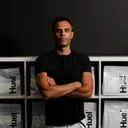
Huel's website went live with no buzz at all and took two orders on the first day. Julian Hearn packed them himself, and says revenue reached £9 million two years later.
Matt Paulson built a daily stock ratings email to keep an ad network happy. The paid version sold 12 subscriptions its first weekend and became MarketBeat.

Matteo Franceschetti and three co-founders put a sleep tracking mattress cover on Indiegogo on 27 January 2015. The $100,000 goal was met the same day, and the campaign closed at $1,231,729 from 5,202 backers.

Victor Cardenas and Kevin Bai spent a year failing before a handful of sneaker resellers told them exactly what to build and what they would pay. Eleven months after that pivot, Slash was at $5 million in ARR.
Share your revenue journey and inspire other founders.