Founder stories
Browse Stories
53 Co-Founderss who succeeded with Communities
Back in late 2016, we launched HeadReach, a sales tool for lead generation. It's a SaaS that helps you find emails of people you want to sell to. Thin...

My partner Danielle was an online English teacher. Every day after teaching, she'd spend hours writing personalized feedback for each student. I watch...

I bootstrapped Drip from zero to acquisition by Leadpages. The key was focusing on a specific niche and building in public. The Pivot Drip start...

Plausible grew to $3.1M ARR as a privacy-first alternative to Google Analytics. The privacy focus isn't a gimmick - it's our core value. The Slow S...

Zapier started by finding customers in help forums. We charged $100 for beta access to filter for committed users. With only $1.4M in funding, we buil...

Stagetimer started as a weekend project. I posted it on Reddit and it took off. Now doing €20K MRR with 85% profit margin. The Reddit Launch I b...

We launched accidentally on Hacker News on 27 May 2020 and the number of databases we hosted jumped ten-fold overnight. The "Open Source Firebase Alte...

Snow Lee is a 3x founder from South Korea who moved his family to California. He received $660K in pre-seed funding. The Pivot First version was...

Marie Forleo, along with Laura Roeder, created B-School. The first year enrolled a few hundred students. Fun Marketing The marketing broke all r...
Chris and his co-founder validated demand first by talking to WooCommerce store owners, then built One Click Upsells to $1K in 30 days.
Arvid and his partner Danielle built FeedbackPanda for online ESL teachers, reaching $55K MRR before selling for a life-changing amount.

After years of solo projects, Justin teamed up with Jon Buda to build Transistor.fm, documenting the journey publicly on their "Build Your SaaS" podcast.

Uku and Marko built an open source, privacy-first alternative to Google Analytics. One blog post changed their trajectory.

Mati and Piotr, childhood friends from Poland, built ElevenLabs to fix robotic AI voices and reached 1M users in 5 months after beta launch.

Dave Rogenmoser launched Conversion.ai and grew to 100K paying customers in under 2 years, reaching unicorn status in 18 months.

Cristóbal Valenzuela started Runway as a NYU research project and grew it into the AI platform behind Oscar-winning films like "Everything Everywhere All at Once."

After building Moz to $30M ARR then stepping down, Rand Fishkin bootstrapped SparkToro to 1,000+ paying customers with a radically different approach.

Colin Nederkoorn started Customer.io with 5 customers paying $10/month and grew it to $70M ARR over 10 years through patient, methodical growth.

Patrick Woods created the Orbit Model for developer relations, then built Orbit to help teams manage communities - raising $22M in the process.

David Cramer started Sentry as django-db-log in 2008. Five years of open source work led to product-market fit from day one when they launched the cloud service.

These 22-year-old Brazilian founders pivoted from VR in Y Combinator to build Brex, solving their own pain of not getting a corporate credit card despite having funding.
Justin Jackson and Jon Buda built Transistor to over $1M ARR while documenting everything publicly on their "Build Your SaaS" podcast.

Andrew Bialecki and Ed Hallen bootstrapped Klaviyo to over $1M ARR before raising, eventually building a $6B+ public company.

David and Marek turned their frustration with low-quality mockups into a profitable, self-funded design tool with 5000+ mockups.
Henrique Dubugras and Pedro Franceschi started working together at 16 and built Brex to $12B valuation.

 Shopify
Tobi Lütke built Shopify because he wanted to sell snowboards online and hated the existing software.
Mark Forrester met his co-founders in an online forum, launched WooThemes, then WooCommerce - acquired by Automattic for $30M+.

Kenny Rueter wanted to sell a sprinkler toy for kids, realized selling information was easier, and built Kajabi into a platform that has paid creators $500M+.

Vlad Magdalin started as a freelance web designer, frustrated with the gap between design and code. After two failed startups, he built Webflow into a $4B company.

Koen Bok sold his first company Sofa to Facebook, then built Framer from a JavaScript library into a $2B AI-powered website builder.
Rob Kalin built Etsy as a cheaper alternative to eBay for handmade goods. The marketplace is now worth $45 billion and changed how makers sell their work.

Amjad Masad was rejected from YC four times and was stuck at $2.8M ARR after 8 years. When he launched Replit Agent, revenue exploded 25x in 12 months.

Demi Guo and Chenlin Meng dropped out of Stanford's AI PhD program after being frustrated with existing AI video tools. They launched Pika on Discord, hit 500K members in 4 months, and raised $135M — all with a team of 13.

Young Zhao's AI livestreaming tool had only 200 users after 3 months. But one tiny clipping feature users kept asking about became Opus Clip — hitting $1M ARR in its first month after beta launch and 10M users within 2 years.

Dan Anisse and Adam Mura ran a Webflow agency and kept building the same components. They productized the work into Relume — a component library that grew to 41K+ users, $150K MRR, and an AI site builder, all bootstrapped.

Grant LaFontaine saw Pokémon card sellers going live on Instagram with clunky workarounds. He built Whatnot — a dedicated live auction platform. Result: $3.7B valuation, 200K+ sellers.

Christine Yen and Charity Majors didn't just build a product — they created the "observability" category. By writing, speaking, and defining the space, Honeycomb became the category leader. Result: $200M+ in funding, used by Slack, Vanguard, and HelloFresh.
Peer Richelsen launched Calendso as an open-source Calendly alternative, attracted 20K+ GitHub stars, rebranded to Cal.com, and raised $32M.
Two software engineers built a side project to map compensation levels across tech companies. Word spread on Blind and HN. Now Levels.fyi dominates tech compensation data.
Aurelio Volle and his co-founder lived on French unemployment support while reinvesting every euro into WP Umbrella, a WordPress maintenance tool that grew to $110K MRR without outside funding.

Junaid Ansari and his cofounder packaged their freelance design and code work into a flat monthly subscription, then grew it to a 75-person bootstrapped team serving thousands of founders.

Rejected by Y Combinator twice, John O'Nolan crowdfunded Ghost on Kickstarter and built it into a $10M ARR open source publishing platform owned by a non-profit foundation.
Michele and Mathias Hansen launched Geocodio as a side project in January 2014. A roughly $30 first month covered their small DigitalOcean server bill and proved strangers would pay.
After years of failed prototypes and freelance work, Peter Hrbacik built KWFinder in about a month, launched it to Hacker News and Reddit, and grew the simple SEO tool into Mangools, a bootstrapped suite reporting roughly $223k/month by 2018.

Anatoly Pashias and Nick Nicolaou built Motionvid.ai from a filmmaker's motion-design bottleneck, launched a 21-day MVP through AppSumo, and grew the AI video tool to about $7.8K MRR without relying on paid ads.

Christian Rac and Braylin Byrd turned a 150K-follower track audience into a subscription training app, building with Rork and ChatGPT instead of custom code and later showing $10,045 MRR on TrustMRR.
RidePal did not start with a broad fitness app. The team built directly for mountain bikers, shared beta versions in rider communities, and saw 35 paying Android customers on launch day.
Deel's first product had no buyers. A pivot ten days before Y Combinator's demo day put 290 contractors and $5,000 a month on the board.

Brian Chesky and Joe Gebbia had paying guests within a week of the idea because a design conference had sold out every hotel in San Francisco. Turning that weekend into a company took a year of failed launches, credit card debt and cereal money.

Eric Migicovsky named Beeper in public in July 2020 and launched it on Hacker News 195 days later as a paid chat app at $10 a month. Automattic bought it in April 2024.
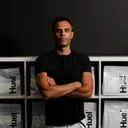
Huel's website went live with no buzz at all and took two orders on the first day. Julian Hearn packed them himself, and says revenue reached £9 million two years later.

Victor Cardenas and Kevin Bai spent a year failing before a handful of sneaker resellers told them exactly what to build and what they would pay. Eleven months after that pivot, Slash was at $5 million in ARR.

Truebill spent two years as a free app whose founders assumed nobody would pay a subscription to cancel subscriptions. The premium tier they shipped as a last resort converted at 3.5 times what Yahya Mokhtarzada expected.
Share your revenue journey and inspire other founders.